The Debts Beneath the Debt: Making Modernization Stick
Modernization works better when organizations look beyond technical debt to the strategic, structural, innovation, and cultural debts that shape it.
When leaders use technical debt as a signal to surface and address deeper strategic, structural, innovation, and cultural debts, each modernization wave becomes safer and more compounding instead of rebuilding the same problems on a new stack.
Technical debt is the symptom, not the disease
Insight: Technical debt is the symptom, not the disease — it points to deeper debts that decide whether modernization will stick.
Modernization becomes safer and more compounding when organizations use technical debt as a signal to surface and address the deeper debts beneath it.
Boards approve modernization to “clean up” legacy. Clouds are adopted, platforms are rebuilt, diagrams are refreshed.
Used well, this moment is a chance to redesign how the organization thinks and adapts — not just how systems are wired. When that lens is missing, modernization fixes the visible layer (technical debt) while leaving the underlying debts intact.
Behind that pattern sit four deeper debts — strategic, structural, innovation, and cultural. They live in how the organization thinks and behaves.
By hidden debt, I mean a repeatable constraint in assumptions, funding/decision rules, learning routines, or incentives that keeps recreating the same technical symptoms.
Once you can name the hidden debt, you gain more levers. Instead of pushing harder on the same projects, you can change logic, structure, experimentation, or culture so each modernization wave leaves the organization more capable than before.
This happens because technical symptoms are easier to fund than the underlying changes in strategy, structure, innovation routines, and culture that determine whether modernization can actually stick.
In one minute
- Technical debt is often the first visible symptom of deeper strategic, structural, innovation, and cultural debts.
- You can migrate to a modern stack and still be unable to modernize if the operating model stays frozen around the old game.
- Start by mapping the four debts to concrete symptoms, then choose one hidden debt to retire before funding the next wave.
Modern stacks can’t modernize old operating models
Most modernization stories begin the same way: a painful incident, a costly delay, or a customer experience that finally becomes embarrassing. Leadership agrees that “technical debt” has accumulated. A major program is launched to replatform, rewrite, or replace key systems.
In the first months, the work looks promising: environments are provisioned, new services appear, and proofs of concept run smoothly. But as soon as the new stack meets the real organization — budgeting cycles, approvals, risk committees, product roadmaps, and line management — progress slows. The “modern” architecture is forced to travel through structures designed for a different world.
The paradox is clear: you can have modern technology and still be unable to modernize. The visible debt in the codebase was only the surface expression of deeper debts in strategy, structure, innovation routines, and culture. Unless those are named and addressed, modernization fails before it really starts.
If you want modernization to stick, you need to name what sits beneath the technical symptoms.
Four hidden debts shape every modernization wave
Sometimes technical debt is just technical. Fix it.
Use this lens when the same technical symptoms return after “successful” rewrites, migrations, or replatforming.
Technical debt is the visible symptom. Hidden debt is the repeatable constraint that keeps recreating it.
Two pairings help you navigate without turning this into a taxonomy:
- Internal logic (Strategy + Structure). What you assume is true — and how funding and decision rules operationalize those assumptions.
- Adaptive capability (Innovation + Culture). How you learn safely — and whether consequences allow learning to change the mainline.
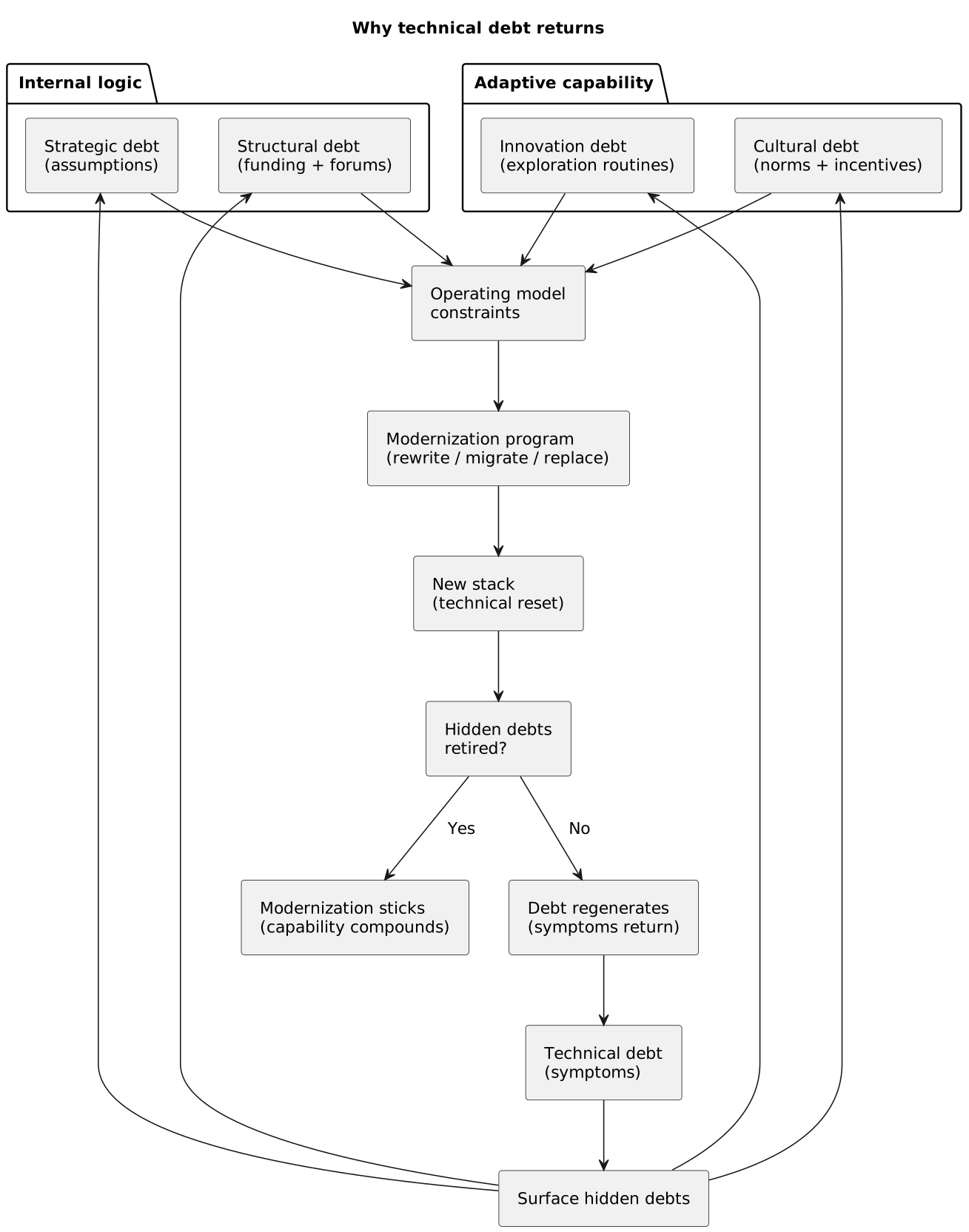
Read the diagram top-to-bottom: if hidden debts aren’t retired, the operating model constrains the program and symptoms regenerate.
Internal logic
- Strategic Debt (assumptions). The gap between how the world works now and the assumptions your strategy still uses — which customers matter, what “core” means, how value is measured, what counts as risk.
- Structural Debt (funding + forums). Funding models, decision forums, and governance designed for stability, not change. It shows up as project-centric funding, siloed ownership, and decision rights that require multiple escalations for small adaptations.
Adaptive capability
- Innovation Debt (exploration routines). The missing muscles for exploring options safely and quickly: experimentation routines, learning metrics, portfolio bets, and mechanisms for retiring what no longer works.
- Cultural Debt (norms + incentives). The behaviors, norms, and unwritten rules that keep people defending the current model even when everyone agrees it no longer fits.
With the four debts mapped, the evidence shows up in how modernization programs behave under pressure.
Modernization programs usually start from visible pain: incidents, fragile integrations, slow delivery. That makes technical debt an attractive label — concrete, bounded, and owned by “IT”.
What leaders are actually frustrated with is systemic: how long it takes to turn intent into change, how risky “core” feels, and how hard it is to respond to new opportunities.
Local optimization. When you frame the problem primarily as technical debt, you localize the solution in the stack. You optimize technology while leaving the broader system untouched — instead of using technical pain as a prompt to adjust strategy, funding, and decision flow.
Structure frozen around the old game. When your structure still reflects the last strategy, modernization runs on a frozen operating model. The organization keeps playing the old game with new tools, unless you consciously bring structure back in line with the strategy you say you want.
Innovation rhetoric without cultural backing. You cannot ask for experimentation, psychological safety, and fast learning while keeping incentives and leadership behaviors that punish small failures and reward predictability.
Debt regeneration. Even when modernization projects technically succeed, old strategic bets, structures, and cultural patterns start rebuilding the same kinds of technical debt on top of the new stack. You pay the visible debt once, but the unseen debts keep generating interest.
Modernization feels harder than it should when the conversation stops at “how do we refactor the system?” instead of “which hidden debt must we retire so modernization can actually change behavior?”
Use this lens when symptoms keep returning because incentives, forums, and decision rules stay the same. Otherwise, fix the discrete defect.
Where the hidden debts show up
You do not need a maturity assessment to find these debts. Look at the seams where strategy meets structure, and where innovation rhetoric meets cultural consequences.
Strategy. Strategy decks talk about platforms, ecosystems, and adaptiveness — but still use old assumptions about what “core” is, which customers matter, and what counts as risk. Strategic Debt is accumulating: language moved faster than logic.
Start by writing down one assumption you are betting modernization on, and attach a test you can run this quarter. Watch whether decision meetings stop arguing about meanings (“what is core?”) and start arguing about evidence (“what did we learn?”).
Structure. Priorities shift, but funding and decision rights still assume projects, departments, and annual plans. Teams need multiple approvals to ship a different outcome. Structural Debt couples with strategy: the organization can’t change direction without re-planning itself.
Start by picking one decision type and removing one escalation layer for 30 days. Watch decision latency and escalation volume.
Innovation. Labs, pilots, and POCs abound, yet few experiments make it into the mainline roadmap. Innovation Debt is high: exploration exists, but there’s no reliable path from learning to adoption.
Start by counting how many “successful” experiments died at the interface with risk, compliance, or finance. Pick one experiment type and fix that interface. Watch for a higher share of experiments turning into roadmap work without a one-off exception.
Culture. Leaders promote “fail fast” and “psychological safety”, but incentives and reviews still reward flawless execution against fixed plans. Cultural Debt is active: the culture that matters (consequences) is optimized for predictability, not learning.
Start by recognizing one well-designed experiment that disproved an attractive idea, and make it visible in the next leadership forum. Watch whether teams volunteer disconfirming evidence earlier instead of hiding it until late-stage delivery.
Diagnostics. People can’t answer, quickly and consistently, how strategy, structure, innovation routines, and culture reinforce each other. Modernization is being treated as technology work while the constraints live in logic and behavior.
Start with a 60‑minute leadership diagnostic and four questions: Are we thinking with old assumptions? Are we organized for a world that no longer exists? Can we evolve safely and quickly? Do consequences reinforce change or punish it? Watch whether the answers lead to changes in forums, funding, and incentives — not just new architecture slides.
Retire one hidden debt before the next wave
Suggested moves — pick one to try for 1–2 weeks, then review what you learned.
Name the four debts (map them to technical symptoms)
Map concrete examples of Strategic, Structural, Innovation, and Cultural Debt in your context (decisions, policies, forums, behaviors) and put them next to the technical symptoms they produce.
Guardrail: keep it to one page and only use examples you can point to (a policy, an approval step, a forum decision, an incentive).
Start in the next modernization steering meeting: capture two examples per debt on a single page. Watch whether the conversation shifts from “what do we rebuild?” to “what debt are we retiring?”
Reframe the modernization case (fund outcomes, not just rewrites)
Stop framing modernization as “replacing legacy” and start framing it as retiring specific debts in organizational logic and adaptability, with clear outcomes for speed, risk, and customer value. This works because if the case stays purely technical, governance will keep treating modernization as a one‑off program instead of a compounding capability.
Start by rewriting one modernization initiative’s one‑pager: add the primary hidden debt it addresses and one non‑technical change it requires (a decision rule, a forum change, a funding rule).
Watch decision flow: fewer “architecture‑only” debates and more decisions about forums, funding, and incentives.
Pair technical milestones with behavioral change (make the new stack usable)
Pair major technical steps (platforms, refactors, migrations) with visible changes in leadership behavior, metrics, and incentives so new capabilities are reinforced rather than neutralized. This matters because modernization fails when modern technology travels through old decision forums and old consequences.
Start by picking one milestone and attaching one behavior change (new decision rights, a protected experiment path, a learning metric).
Watch whether teams can ship changes without re‑planning every time a priority shifts.
Which is also why modernizing is rebuilding, not repainting has to go deeper than tools and interfaces.
If you skip the deeper debts beneath the debt, modernization will keep looping through a familiar pattern: promising pilots, expensive programs, partial rollouts, and a quiet return to the old way of working. The codebase will change; the lived experience of making change happen will not.
Modernization will either be a technology story that leaves hidden debts untouched, or a systemic shift that uses technology as leverage to renegotiate how you think and behave.
Which hidden debt is stopping your modernization before it even starts?