The Strategy Blind Spot: You Can't Optimize Value You Can't Describe
You cannot focus strategy or modernization if you cannot clearly describe how value is created.
Most organizations invest heavily in digital and modernization without a simple, shared model of how value is actually produced. When leaders make value creation explicit, prioritization sharpens, sequencing gets easier, and modernization stops spreading effort everywhere at once.
You can’t optimize value you can’t describe
Insight: You can’t optimize value you can’t describe.
Most strategy conversations assume everyone shares the same picture of how the business creates value. In practice, that picture is rarely drawn, tested, or even spoken out loud.
When value creation remains an implicit story in leaders’ heads, modernization becomes a game of guesswork. Investments chase visible problems, strong narratives, or local optimizations, not the few capabilities that really move outcomes. You end up optimizing activity instead of leverage.
This happens because a shared model turns strategy from slogans into choices that can be traced into capabilities, metrics, and systems.
In one minute
- Without an explicit value creation model, portfolios become busy and under-leveraged.
- Governance rewards narratives and local optimizations when there’s no shared map to challenge priorities.
- Start by drawing a one-page value map and using it to re-sequence (and stop) modernization work.
A portfolio can be full and still be incoherent
Imagine a typical quarterly portfolio review. Slides flow by: cloud migrations, data platforms, product features, automation waves, “AI pilots”. Every initiative can explain its own business case. Very few can show how they fit together into a coherent change in how the company creates value.
Around the table, leaders see different pieces of the system. Product talks about conversion and engagement. Operations talks about throughput and error rates. Finance talks about cost and risk. Technology talks about reliability and speed of change. Each perspective is true, but there is no shared map that connects them.
In this environment, modernization feels busy but strangely unsatisfying. Budgets are large, teams are stretched, and yet the organization struggles to answer simple questions: Which capabilities are we really trying to build? Where are we intentionally increasing leverage, rather than just keeping up?
When value is implicit, governance becomes guesswork
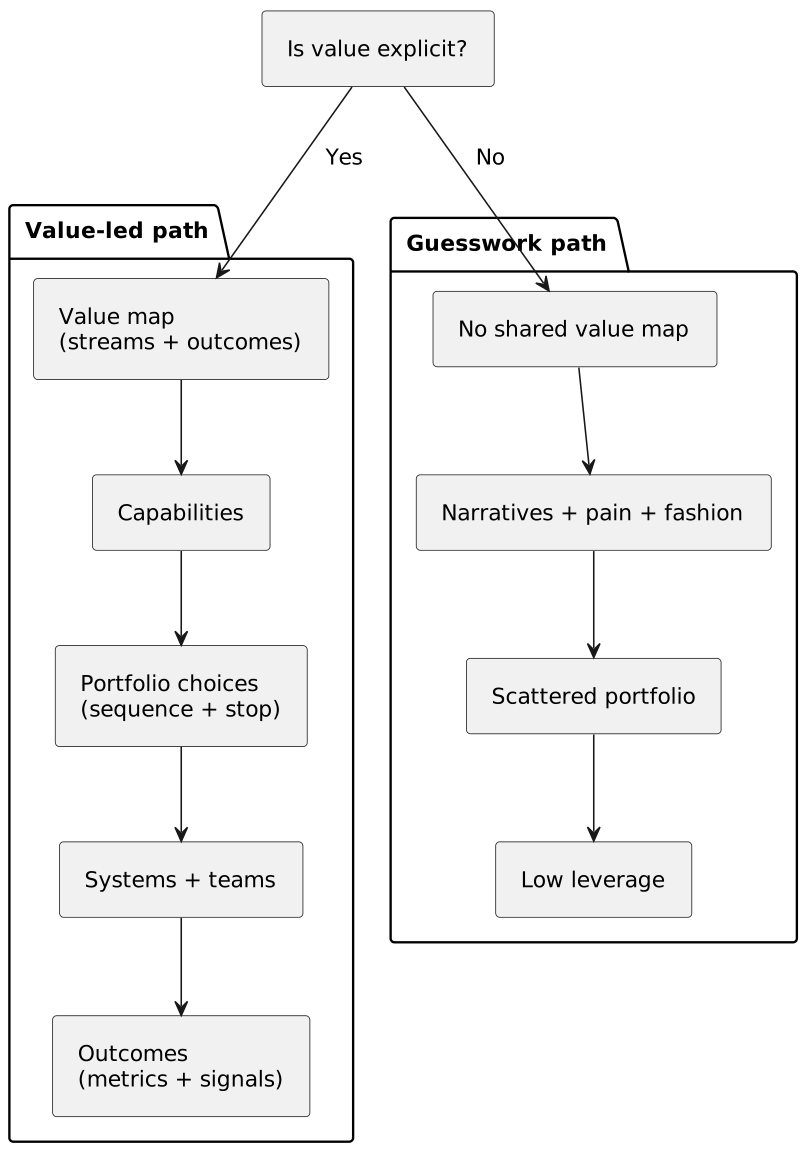
First, strategy often stays at the level of slogans and themes. “Be more customer‑centric.” “Become a data‑driven organization.” “Build a platform business.” These ideas are helpful for direction, but they rarely get translated into specific capabilities and constraints that people can see and challenge. The gap between the story and the system remains wide.
Second, the operating model is usually organized by function, not by value. Budgets, KPIs, and incentives follow departments and products rather than end‑to‑end value streams. Leaders become experts in optimizing their own slice — call center, sales force, core system, branch network — without a strong line of sight to the full value equation.
Third, the value of software and data is harder to see than the value of physical assets. Factories, stores, and trucks are tangible. Capabilities like “fast experimentation”, “personalized pricing”, or “near real‑time risk sensing” are not. As a result, technology and architecture are discussed as costs, tools, or projects, instead of as levers in the value creation model.
Finally, governance forums rewards convincing narratives over structural clarity. In steering meetings, the initiative with the more compelling story, more urgency, or more senior sponsor often wins. Without a shared value model on the table, it is difficult to challenge whether that story actually touches the right constraints in the system.
This is less acute in a single-stream business with a stable model and clear unit economics. It becomes critical when multiple streams and trade-offs collide and the portfolio has no shared map to arbitrate choices.
How to tell value isn’t explicit
Listen carefully to how decisions are justified and how leaders talk about the portfolio.
Portfolio. The organization can point to a full roadmap, but struggles to explain how it changes value creation. Modernization became its own goal instead of a means to reshape capabilities. A good first move is to require every initiative to name the value stream it affects and the capability it changes.
Stories. Different leaders tell incompatible stories about where value really comes from. There is no shared model to integrate perspectives into one value equation. A practical way to start is to draw a one-page value map and use it to converge on one narrative that can be debated and revised.
Pain. Decisions are justified by pain (“this queue is too long”) rather than leverage (“this capability unlocks outcomes”). The portfolio is being pulled by the loudest symptoms, not the most powerful constraints. One simple move is to separate symptoms from constraints and prioritize constraints that compound impact across streams.
Fashion. Technology choices are explained by fashion (“modern”, “industry standard”) rather than by a role in the value model. Architecture drifts toward generic best practice instead of strategic fit. A useful next step is to ask: “Which capability does this enable, and what would change in outcomes if we shipped it?”
Make value explicit, then modernize with focus
Suggested moves — pick one to try for 1–2 weeks, then review what you learned.
Draw a one-page value map (and name the streams)
Describe, in plain language, how the organization creates value today. Name the few key value streams and the outcomes that matter in each. If you can’t describe value, you can’t prioritize modernization toward leverage.
Start by running a 90‑minute session with a small senior group and producing a one‑page draft. Watch whether leaders can use the same map in portfolio debates instead of competing stories.
Name capabilities and constraints (not projects)
For each stream, identify the 5–7 capabilities that disproportionately change outcomes, then surface the constraints that limit them. Constraints are the real levers; projects are just delivery shapes.
Start by picking one stream and listing 3 capabilities plus their top constraint (data, decision rights, process design, talent, contracts). Watch decisions shifting from “what’s urgent?” to “what changes the system?”
Reframe the portfolio and make the model “living”
Re-sequence, merge, or stop initiatives based on which stream/capability/constraint they meaningfully change, and bring the map into steering forums. The model only matters if it governs decisions repeatedly, not once per strategy cycle.
Start by requiring every proposal in the next steering meeting to answer: “Which stream, which capability, which constraint, and how we’ll observe impact?” Watch a sharper portfolio with fewer initiatives and clearer compounding effects.
When the value creation model stays vague, organizations do not usually fail through a single bad bet. They fail through slow dilution of effort. Portfolios grow heavier, teams feel permanently overloaded, and each new initiative moves metrics only marginally because effort is spread everywhere.
Competitors who build a clearer capability-to-value view often win with less total investment. They say “no” more often because they can see which constraints really matter — and modernization becomes focus, not volume.
What would your one-page value map reveal about where to focus modernization first?